Alien flora

Status
Not open for further replies.

Frosty

Registered
Joined
Jul 2, 2007
Messages
37
Reaction score
6
Location
England
http://sciencefictionbiology.blogspot.com/2007/04/color-of-alien-flora.html

Exotic extraterrestrial foliage has been a science fiction staple since Wells' described the invading red plants of Mars in 1898. While red plants are colorful, natch, they don't necessarily have any basis in biology. Fortunately for people who like bio-accuracy in their science fiction, NASA biometeorologist Nancy Kiang and colleagues have published an article that predicts the color of plant life on extrasolar planets based on the type of star the planet orbits and the predicted planetary atmosphere.

The plant color we see is determined by the wavelength of light reflected by their leaves. Typical green plants absorb photon-rich red light and high-energy blue light and reflect the unused green light. Light absorbing pigments such as chlorophyll capture the photons' energy, which is then used to convert carbon dioxide and water into sugar. Based on the current understanding of that process of photosynthesis in terrestrial plants and bacteria, the NASA-lead research team believes that plants can come in many colors - except bright blue.

The [email protected] article conveniently provides a star type - plant color guide:

HOTTER THAN THE SUN
Plants will mainly be white, green, yellow, orange or red.

LIKE THE SUN
Green, yellow, orange.

COOLER THAN THE SUN
Green, yellow, orange.

RED DWARF
Black, grey-white, purple, many other colours.

It looks like red is an unlikely color for plants growing in our solar system. But if the invaders were from a planet orbiting Sirius, that's another story.
 

dclary

Unabashed Mercenary
Poetry Book Collaborator
Requiescat In Pace
Registered
Joined
Oct 17, 2005
Messages
13,050
Reaction score
3,525
Age
57
Website
www.trumpstump2016.com
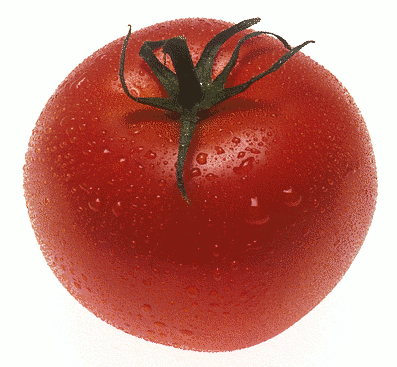
I agree. Red is a ridiculous color for plants in our solar system.

tomato.png


reddel.gif


valencia-red-rose_11077.jpg


Ahem.
 

sunandshadow

Impractical Fantasy Animal
Super Member
Registered
Joined
Apr 17, 2005
Messages
4,827
Reaction score
336
Location
Pittsburgh, PA, USA
Website
home.comcast.net
Lol the fruit and flowers aren't the 'plant', they're only talking about the parts which absorb chlorophyll. Although there could certainly be plants where the flowers and fruit absorbed chlorophyll like leaves, their primary purpose is to be seen/smelled and then interacted with by animals to cause pollination and seed spreading.

My own question - since black leaves absorb all light, wouldn't they be the best for any type of sun? Yet we have mostly green-leafed plants and only a few black-leafed ones, and the black-leafed ones don't seem to have any advantage over the green-leafed ones...?
 

dclary

Unabashed Mercenary
Poetry Book Collaborator
Requiescat In Pace
Registered
Joined
Oct 17, 2005
Messages
13,050
Reaction score
3,525
Age
57
Website
www.trumpstump2016.com
Oh! Red plants!

Like red dogwoods?

RedOsier%20Dogwood.jpg


Or the red ferns from "Where the Red Fern Grows?"


I think these scifibiology guys are whack.
 

blacbird

Super Member
Registered
Joined
Mar 21, 2005
Messages
36,987
Reaction score
6,159
Location
The right earlobe of North America
There is a photosynthetic molecule other than chlorophyll. I read a science article on it a few weeks ago, but can't recall the name. It is used by certain bacteria, and operates at a somewhat less energy-efficient level than chlorophyll does. And it's purple. The article noted that biologists think it probably came into being before chlorophyll in the evolution of organic life on this planet.

The other pigments in leaves, flowers, fruit, etc. that give rise to bright coloration are not photosynthetic. Mostly they are present to attract insects and other animal vectors in order to promote pollination, dispersal of seeds, etc.

caw
 
Status
Not open for further replies.