Okay, if you want the flip side of all this ...
I'm consulted on every cover. (Cover "consultation" is in the contracts now, though cover "approval" is not.) I'm asked for my ideas at the very beginning of the process, they always use my ideas in the cover design, and if I'm not happy they make changes. Two out of my last five covers were totally redesigned at least twice -- and I vetoed three different versions of one of them. In other words, they ask for my input and respect my wishes.
Yes. They do.
But let me preface that with necessary background.
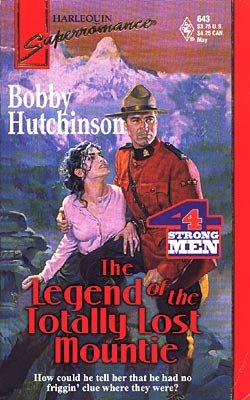
I started out in romance, and then -- as now, I believe -- authors were asked to fill out a cover art "fact sheet," or something like that (I forget exactly what it was called) for every title. As has already been mentioned here, romance covers range from bearable to please-kill-me-now, with everything in between, and there wasn't a lot of wiggle room. You were very likely going to get a "clinch" cover, the pose was going to be unnatural, and if you were very lucky both characters would have the proper number of arms and legs and not be more than half naked.
Many of us protested crappy covers. Some of us were ignored -- okay, most of us were ignored -- but not all of us. And I'm not talking about the occasional high-paid diva, but ordinary working writers who had to turn in a lot of books just to make a decent living. Some of us fought, for years, to have some say in how our work was presented to the public. The problem was, we were fighting publishers who were selling a "thing" they wanted as obviously defined as possible.
Romance. Two people, embracing, looking sappy. No mistaking what that was, certainly.
As I said, some of us were able to get small changes. And as the market boomed, then began to fade (genre fiction being a cyclical thing), publishers tried different things. They tried "element" covers, like a chair on a beach, or a packet of love letters on a table. They tried flower covers. They tried more "realistic" couples on the covers. More idealized couples on the covers. They even tried plain-Jane covers that might have represented your grandma's wallpaper.
Eventually, branding authors became more the thing. For an author to have a distinct look for all of his or her work was something marketing could get behind. Something to make an author's work stand out in the marketplace. That was the theory, anyway.
Those of us who had persistently, politely, stubbornly offered our ideas over the years -- being as how nobody knew our books better than we did, after all -- found some of our publishers becoming more receptive. And some of us, who had spent many, many hours in bookstores and believed we knew what caught the eye of a browsing reader, put a lot of thought into cover ideas long before we offered those ideas to our publishers.
I've been lucky in that my career has seen steady growth over the years. My cover ideas have virtually always been improved-upon by the art department at my publisher, which I believe pleases both them and me. In any case, the cover designs have been successful and my "look" is about as distinct as it can be without a long line of nearly identical covers (something I really work hard to avoid).
The point of all this is just to say that it never hurts to offer cover ideas. Politely, professionally. A simple, "This is the image I saw in my head while I was working on the book," is unlikely to cause your publisher to view you as a troublemaker.
And if something is desperately wrong with a cover design, something that gives you a sick feeling in the pit of your stomach or makes you want to put a bag over your head when you know the book hits the shelves, it never hurts to -- politely, professionally -- express your concerns.
If I could offer one bit of advice to new authors, it would be about attitude. Whine and complain, and you'll get a reputation for that. A reputation which will, believe me, spread around NY quicker than you can imagine. And unless you have blockbuster sales right out of the gate, nobody in NY wants to work with a diva or an arrogant jerk.
When your mom taught you to say please and thank you, she knew what she was talking about. Courtesy and professionalism help you to get what you want, especially when you combine that with genuine respect for the other professionals in this business.
So how much say can you get in cover design? That depends on your publisher -- but it also depends on you.
Learn to pick your battles. Decide what's most important to you, and learn how to fight for those things without alienating the pros you'll be working with.